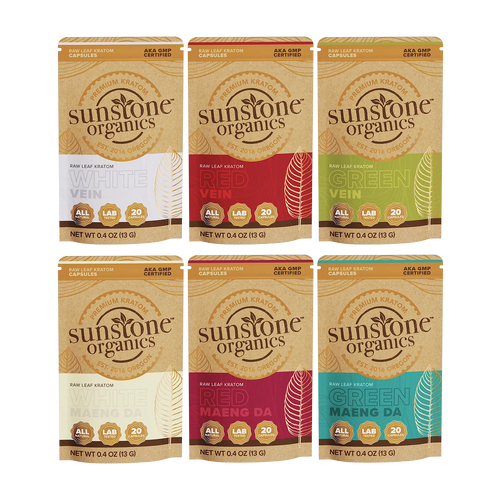
Kratom has its own vocabulary, and understanding the language can help you make informed choices. Whether you're new to kratom or brushing up on the basics, this glossary covers the most common terms you'll encounter—from vein types and strain names to product formats and compliance terms.
Use this guide as a quick reference or a learning tool as you explore Sunstone Organics’ premium kratom offerings.
Alkaloids
Naturally occurring compounds found in kratom leaves. The two most well-known kratom alkaloids are mitragynine and 7-hydroxymitragynine. Alkaloid profiles may vary by strain, region, and harvest conditions
American Kratom Association (AKA)
A nonprofit group that advocates for consumer rights and safety in the kratom industry. The AKA also runs a voluntary GMP compliance program for vendors.
AKA GMP Qualified
A designation for vendors who meet the Good Manufacturing Practices set by the American Kratom Association. Sunstone Organics is an AKA GMP Qualified vendor, meaning we follow strict standards for cleanliness, testing, and transparency.
Capsules
Pre-measured gelatin or vegan capsules filled with kratom powder. Capsules offer convenience and consistent servings.
Drying Process
The method used to dry kratom leaves can affect their color and properties. Sun-dried leaves may result in red or green veins depending on time and exposure.
Extracts
A concentrated form of kratom, typically found in liquid kratom shots. These are more potent than raw powder and should be used responsibly.
Farm-to-Finish
A term used to describe kratom that is tracked from its source farm to the final packaged product. At Sunstone, we prioritize transparent sourcing from trusted harvesters.
Indigenous Use
Refers to the traditional ways Southeast Asian communities have used kratom leaves for centuries. These practices are the roots of today’s modern kratom consumption.
Lab Testing
Third-party laboratory testing is used to ensure kratom is free from contaminants such as heavy metals, pathogens, or adulterants. It also confirms alkaloid content. Every Sunstone batch is lab-tested for safety and quality.
Maeng Da
A premium classification of kratom, often associated with higher alkaloid content. Not a region, but rather a name applied to specially selected leaves. Available in red, green, and white vein varieties.
Natural Product
Kratom is a botanical harvested from the leaves of Mitragyna speciosa, a tree native to Southeast Asia. Products are minimally processed to preserve their natural properties.
Powder
The most traditional form of kratom. Kratom powder is made by drying and finely grinding the leaves. It allows for flexible serving sizes and can be used in tea, mixed with liquids, or added to recipes.
Red Vein Kratom
Kratom harvested from leaves with red-colored veins. Often associated with more mature leaves and traditionally used in evening routines.
Serving Size
Refers to the amount of kratom used at one time. It’s recommended to start with a small serving and adjust as needed. Always follow the instructions on your product label.
Strain
A classification based on the color of the vein (red, green, white, yellow) and the region or method of processing. Examples include Green Maeng Da or Red Borneo.
Third-Party Testing
Independent testing by an outside lab to ensure a product meets safety and quality standards. Sunstone Organics publishes results upon request.
Vein Color
The color of the central vein in kratom leaves—red, green, white—used to classify strains. Each vein type may offer different user-reported characteristics.
White Vein Kratom
Often derived from younger leaves and associated with daytime routines or those seeking focus. Includes standard and White Maeng Da varieties.
Yellow Kratom
A specialty variety that may result from blending or fermenting leaf types. Not all vendors carry yellow kratom; it’s considered a niche option.
Have a term you'd like us to add? Contact Us and let us know!