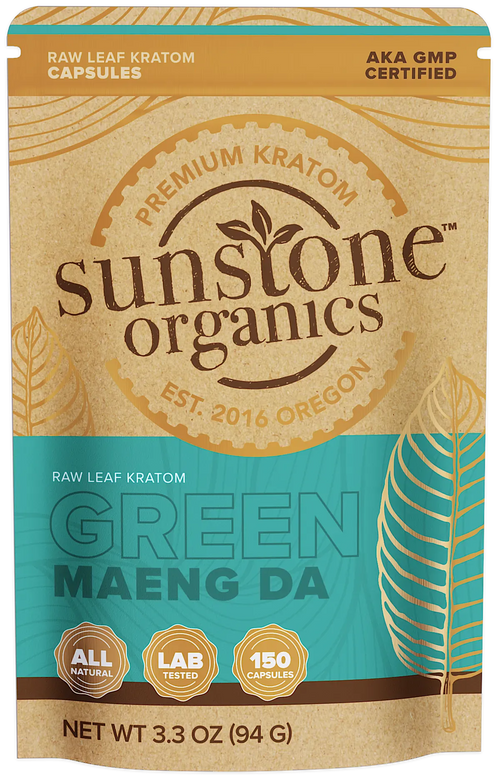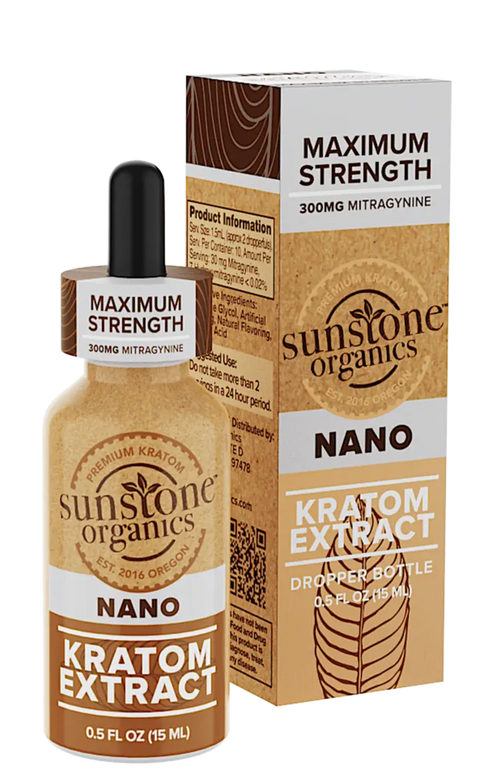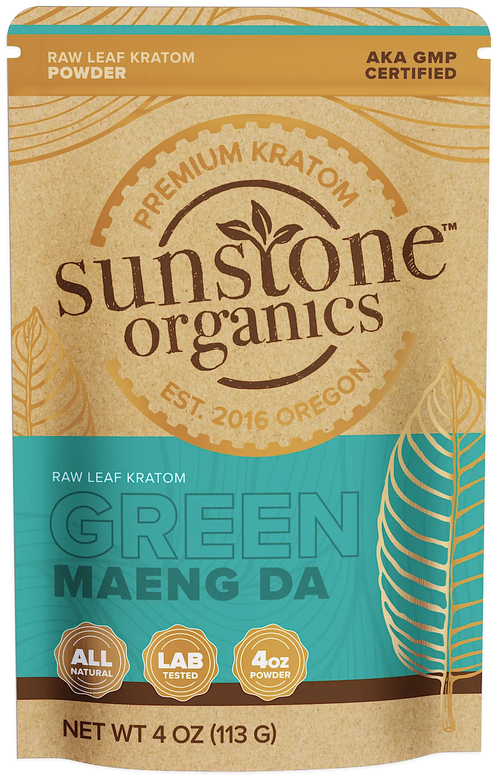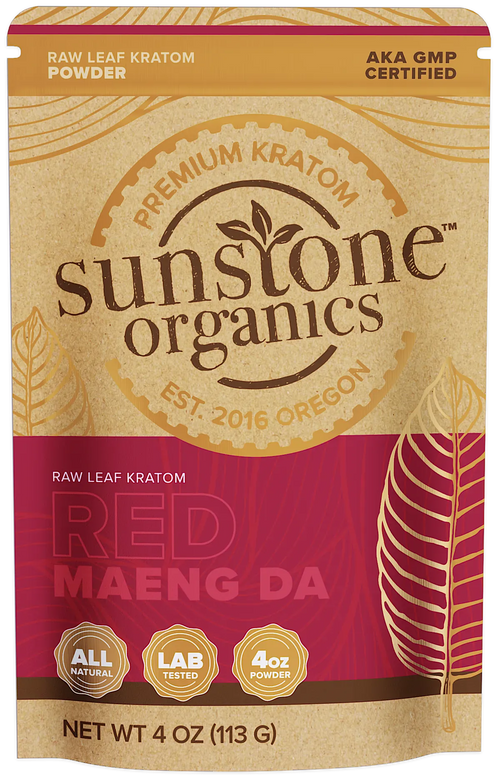
A Certificate of Analysis, or COA, is the document a lab issues after testing a kratom sample — it lists what's actually in the batch: alkaloid content, heavy metals, microbial counts, pesticides, and residual solvents. Every batch we sell gets one. Here's how to actually read one, using a real Sunstone lab report as the example.
What is a kratom COA?
It's a lab's written record of what it tested and what it found, tied to one specific lot. A COA that doesn't name the lab, the method, and a lot number isn't telling you much — it's a claim about testing, not evidence of it. Ours are issued by Cora Science, LLC in Austin, Texas, a lab accredited to ISO/IEC 17025:2017 by PJLA. Every COA we publish is posted in full on our lab reports page, tied to the lot number printed on the bag.
Walking through a real one
The example below is Lot 156 C2, the full six-page report is public on our lab reports page. Four sections matter most.
Alkaloid content
This is what the leaf's chemistry actually looks like, tested by UHPLC-DAD (a standard method for measuring plant compounds precisely). On Lot 156 C2:
| Compound | Result |
|---|---|
| Mitragynine | 0.786 w/w% |
| Paynantheine | 0.167 w/w% |
| Speciogynine | 0.137 w/w% |
| Speciociliatine | 0.412 w/w% |
| 7-Hydroxymitragynine | below detectable level |
| Total mitragyna alkaloids | 1.50 w/w% |
"w/w%" means weight by weight percent — how much of the sample's total weight is that compound. There's no official government standard for what these numbers "should" be; what matters is that the lab measured them and published the method, rather than asking you to take a strength claim on faith. A bag that says "high potency" with nothing behind it isn't the same thing.
Heavy metals
Kratom is a leaf, and leaves take up trace metals from soil the way any crop does. The test is ICP-MS (inductively coupled plasma mass spectrometry), checked against limits for arsenic, cadmium, mercury, and lead. On Lot 156 C2, every result came in well under its limit — arsenic at roughly a fifth of the allowed maximum, lead at about a tenth. "PASS" on this section means the lab measured a real number and that number cleared the bar, not that the section was skipped.
Microbial testing
This section checks for the organisms that make food (or a botanical product) unsafe: total aerobic bacteria, yeast and mold, coliforms, and two specific pathogens — E. coli and Salmonella, both tested to "not detected." The general bacterial counts on Lot 156 C2 also came in well under their limits.
Pesticides and residual solvents
Sunstone leaf is screened against a panel of dozens of pesticides and processing solvents. On this lot, results were either not detected or below the lab's limit of quantitation across the board — the two lowest-level exceptions (a trace of chlorpyrifos-ethyl, a below-threshold pyrethroid reading) both landed well inside their pass limits, not near them.
What to look for — and what should make you ask questions
- A lot number that matches the bag. If the COA can't be tied to what's in your hand, it's not proof of anything about that product.
- A named, accredited lab, not just "third-party tested" with no lab identified.
- Actual numbers, not just "PASS" on everything. A report that only shows pass/fail with no measured values is thinner evidence than one that shows the number and the limit side by side.
- A recent test date. Kratom is agricultural material; a COA from two years ago tells you about a different harvest.
- All the sections, not just alkaloids. A report that only shows potency and skips heavy metals or microbials is answering a different question than "is this safe," and strength alone isn't the point — see our guide to vein colors for why the same alkaloids show up differently across green, white, and red.
None of this makes any single batch a guarantee forever — testing is why we can show you this lot, not a promise about the next one. That's also why our about page explains the process behind every batch, not just this one.
What AKA GMP certification adds
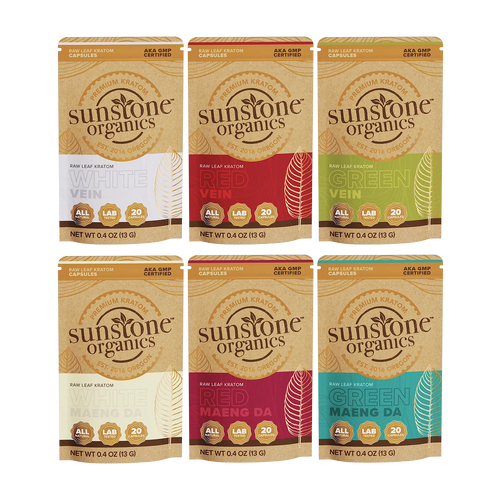
Testing tells you about one lot. Good Manufacturing Practices (GMP) certification through the American Kratom Association is a separate audit of how the facility itself operates — sanitation, recordkeeping, consistent procedure — checked by a third party, not self-reported. Sunstone's facility in Springfield, Oregon is AKA GMP qualified. Testing and GMP answer different questions; you want both.
Frequently asked questions
What is a kratom COA? A Certificate of Analysis — a lab's report on what a specific batch of kratom actually contains, covering alkaloid content, heavy metals, microbials, pesticides, and residual solvents.
Where can I find Sunstone's lab reports? Every current COA is posted in full on our lab reports page, organized by lot number.
Does a clean COA mean a product is completely risk-free? No. A COA tells you what's in the bag and what isn't — it doesn't remove kratom's own risks, including dependence with regular use, which we cover honestly in Is Kratom Addictive?
What's the difference between third-party testing and AKA GMP certification? Testing checks one batch's contents. GMP certification audits how the facility operates overall — sanitation, process, recordkeeping. They're not substitutes for each other.
Why doesn't the COA say a strength rating? Because there isn't an official one to give. The COA reports measured alkaloid percentages; what a bag is labeled reflects the test, not a marketing scale.
Written by Todd, founder of Sunstone Organics. Sunstone has processed lab-tested kratom in Springfield, Oregon since 2016, in an AKA GMP-qualified facility. Last updated September 2026.