If you have read anything about kratom, you have read about mitragynine. It is on our lab reports, it is the number people compare between vendors, and it is the compound nearly every study is about.
It is also about one fortieth of the story, and I think the rest of that story is more interesting.
The direct answer
Mitragynine is the most abundant alkaloid in the kratom leaf, and the most studied by a wide margin. An alkaloid is just a naturally occurring plant compound — caffeine in coffee, theobromine in cocoa. Kratom makes a lot of them.
Researchers have identified more than 40 alkaloids in Mitragyna speciosa. Most of the published research is about two of them: mitragynine and 7-hydroxymitragynine. An expanded lab panel, the kind on our lab reports, measures five: those two plus speciociliatine, paynantheine, and speciogynine, the most abundant of the rest.
That is worth sitting with. When a bag lists a mitragynine percentage, that number is real and worth having. It is not a summary of what is in the leaf, and even five numbers are not the whole leaf.
What we are not going to tell you
After mitragynine, the best-known names are the three the expanded panel measures — speciociliatine, paynantheine, and speciogynine — then speciofoline and a long tail after that. You can find pages online that assign each one a tidy effect.
We are not going to do that, because the research does not support it. Even the three we test for are measured far more reliably than they are understood: the science on them is early, and there is much less known about them than about mitragynine. Most of the long tail has never been studied in people at all. Where the pharmacology exists it is early, in vitro, and frequently surprising. Anyone selling you a confident story about what a minor kratom alkaloid does is telling you something nobody currently knows.
What can be said honestly is narrower and, I think, more useful: the amounts change based on how the leaf is handled after harvest, and you only see that on a report that measures more than mitragynine.
Where vein colors actually come from
We covered this in our post on green, white, and red vein kratom: the colors are not different plants. They describe what happened to the leaf after it was picked.
Research bears that out. Vein-color phenotypes share the same core alkaloid profile and differ in the amounts, not by containing some compound the others lack. There is no unique red-vein molecule.
What there is, is processing. A 2025 study on post-harvest handling put real numbers on it:
- Withering — resting the leaf before drying — raised mitragynine by 14 to 65 percent in one cultivar and 3 to 8 percent in another.
- A 12-hour wither followed by drying below 40 °C raised speciogynine by 37 to 48 percent and paynantheine by 35 to 67 percent.
- Drying temperature matters on its own. Leaf dried at 25 °C held 3 to 26 percent more mitragynine than the same leaf dried at 60 °C.
Those are single-study figures on specific cultivars, not universal constants. But the direction is consistent and it is the honest version of something the industry usually hand-waves.
What happens to the mitragynine
Red vein is traditionally fermented and dried outdoors, classically in the sun, and it comes out lower in mitragynine than green. That part is well established, and as the drying numbers above show, temperature alone moves it.
So where does it go? It converts. Alkaloids do not simply vanish — mitragynine is a molecule, and heat, light and oxygen rearrange it into other molecules rather than deleting it.
That chemistry is documented. Mitragynine is an indole alkaloid, and indole alkaloids oxidise and rearrange readily — a range of oxidised byproducts has been identified in commercial kratom.
The cleanest example is epimerisation. At elevated temperatures, mitragynine will flip at a single junction in the molecule and become speciociliatine. Same atoms, same count, same molecular weight — reassembled. It is a different compound with a different name, and a mitragynine-only test never sees it. An expanded panel reports it on its own line. Nothing left the leaf. The mitragynine number went down anyway.
What nobody can hand you is the full ledger: which compounds, in what proportion, in the leaf that ended up in your bag. An expanded panel shows part of it — mitragynine that flipped into speciociliatine is still counted, under its new name. The oxidised byproducts are where testing runs out. No routine panel measures them, so mitragynine that became one of those and mitragynine that was destroyed outright look identical. The number simply reads lower. Everything downstream of that is inference.
The 90-fold problem
Here is the finding that changed how I think about sourcing.
A 2020 survey of commercial kratom products (Sharma et al., Scientific Reports) measured alkaloids across brands. Mitragynine content varied about fourfold between products — a wide spread already. Speciofoline, a minor alkaloid, varied by more than 90-fold. The variation was large enough that the researchers sorted products into two distinct chemotypes based on it.
Ninety-fold. Between things sold as the same product category, to the same customers, with nothing on any label to indicate it.
We do not know what that difference means, and neither does anyone else yet. What it does tell you is that "kratom" is not one consistent input. Two bags with the same vein name and a similar mitragynine number can be materially different material.
Which is why testing is the whole thing
This is the part I actually want you to take away.
You cannot evaluate a kratom supplier on strain names. Strain names are marketing vocabulary, and we have said so in writing about Maeng Da. You cannot evaluate one on vein color either, since that describes a process, not a specification.
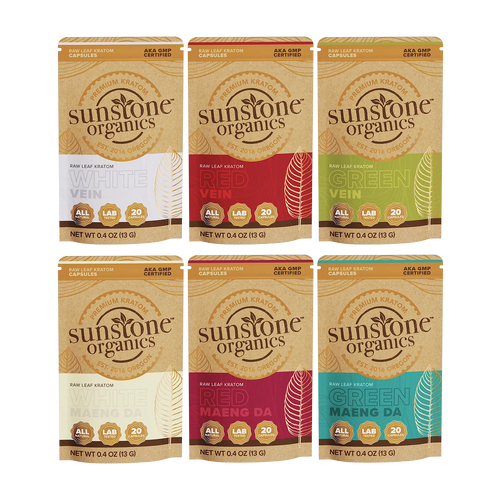
What you can evaluate is whether somebody measures what they sell and shows you the measurement. Every batch we sell in Springfield is lab-tested for alkaloid content, heavy metals, and microbials, and the certificate of analysis is published. We have processed kratom here since 2016, in an AKA GMP-qualified facility, and the number is on the bag if you want to ask about any of this.
That does not make our leaf identical batch to batch. It is an agricultural product and it will not be. It means you get to see what a given batch actually is instead of trusting an adjective.
The risk note, which belongs in every one of these
Kratom can produce dependence with regular use, and stopping after sustained use can be genuinely difficult. That is true of every vein color, every alkaloid profile, and every supplier including this one. Buy tested product, start conservatively, take breaks, and be honest with your doctor about what you are taking.
Frequently asked questions
What is mitragynine? The most abundant and most-studied alkaloid in the kratom leaf. It is what most lab reports quantify and what most research examines.
How many alkaloids does kratom have? More than 40 have been identified. Most research is about two of them, mitragynine and 7-hydroxymitragynine. An expanded lab panel measures five: those two plus speciociliatine, paynantheine, and speciogynine.
Does a higher mitragynine percentage mean stronger kratom? It is a compositional fact about the leaf, not a measure of anything you will experience. On its own it also says nothing about the other alkaloids present, which is why a report that lists them is worth more than a single number.
Do red, green, and white vein kratom have different alkaloids? They share the same core set. The amounts differ, driven by how the leaf was withered, dried, and fermented after harvest. No vein color contains an alkaloid the others do not.
Which alkaloids do labs test for? A basic potency test reports mitragynine, often with 7-hydroxymitragynine. An expanded panel adds speciociliatine, paynantheine, and speciogynine, the most abundant alkaloids after mitragynine. That is what our lab reports show. The science on those three is early — there is much less known about them than about mitragynine — so the numbers tell you what is in the batch, not what it means. Past those five, routine testing stops.
What should I look for in a kratom supplier? A published certificate of analysis for the batch you are actually buying, covering alkaloid content (more than just mitragynine), heavy metals, and microbials — plus a phone number that a person answers. Ours are at lab reports, and every powder we sell is tested before it ships.
Written by Todd, founder of Sunstone Organics. Sunstone has processed lab-tested kratom in Springfield, Oregon since 2016, in an AKA GMP-qualified facility. Last updated September 2026.